

Therapy, Disability

C-PTSD in the Disability Community

When Trauma Becomes Part of Everyday Life

When most people hear the term PTSD, they may think about a single traumatic event: a serious accident, an assault, military combat, a natural disaster, or another experience that left someone feeling unsafe. But trauma doesn’t always happen once. Sometimes it happens repeatedly, over months or years, and sometimes there is no easy way to escape the circumstances causing it.

This is where complex post-traumatic stress disorder, or C-PTSD, comes into the picture. PTSD and C-PTSD have a lot in common, but C-PTSD can develop in the context of prolonged or repeated trauma. It can affect not only how someone responds to memories of trauma, but also how they see themselves, regulate their emotions, relate to other people, and experience the world around them. For disabled people, that distinction can be particularly meaningful.

Disability itself does not cause C-PTSD. Being disabled is not inherently traumatic. But disabled people can experience repeated discrimination, exclusion, medical trauma, abuse, inaccessible environments, social isolation, and messages that they are less capable or less valuable than nondisabled people. When those experiences pile up over time, they can have a profound effect.

PTSD and C-PTSD: What’s the Difference?

PTSD can develop after someone experiences or witnesses something deeply frightening, threatening, or traumatic. The symptoms generally fall into several broad categories. Someone with PTSD may repeatedly experience the traumatic event through unwanted memories, nightmares, flashbacks, or intense emotional reactions. They may avoid people, places, conversations, or activities that remind them of what happened. They may also experience changes in their mood and thinking, such as persistent fear, guilt, shame, anger, or difficulty feeling positive emotions.

Another major part of PTSD is feeling constantly on guard. A person might startle easily, have trouble sleeping, feel irritable, or constantly scan their surroundings for danger.

C-PTSD can include all of these PTSD symptoms, but it also involves deeper, longer-lasting effects on a person’s sense of self and relationships. Someone experiencing C-PTSD may struggle with regulating their emotions. Their reactions may sometimes feel overwhelming or difficult to control. They may carry a deep sense of shame or worthlessness. They may have difficulty trusting people, forming relationships, setting boundaries, or feeling genuinely safe and connected to others.

In other words, PTSD can involve the feeling that something terrible happened to me. C-PTSD can add the feeling that something terrible happened to me for so long that it changed how I see myself and the world.

When the World Keeps Telling You That You Don’t Belong

For many disabled people, trauma isn’t necessarily one dramatic event. Sometimes it’s the accumulation of thousands of smaller experiences. It’s being talked down to by strangers, having someone speak to the person accompanying you instead of speaking directly to you, having your disability questioned or dismissed, or repeatedly being told that you’re “too young” to be disabled, that you “don’t look disabled,” or that you’re making too much of your needs. It’s having to explain and defend yourself over and over again.

It’s also being excluded from places because they aren’t accessible. Accessibility problems aren’t just inconveniences when they happen repeatedly. Imagine being a wheelchair user and repeatedly arriving somewhere only to discover that there is no ramp or elevator. Imagine planning your day around whether a building has an accessible entrance, whether a bathroom can accommodate you, or whether transportation will actually be usable. Imagine being blind and navigating streets where sidewalks are poorly designed, crossings are dangerous, or the environment provides little reliable information about what is happening around you. Imagine having a sensory disability and repeatedly being expected to tolerate environments that overwhelm you because other people consider your needs inconvenient.

These experiences can create an ongoing sense that the world is not designed for you and that your safety, comfort, and participation are secondary concerns. When exclusion happens once, it can be frustrating. When it happens constantly, it can change how you experience the world.

The Damage of Being Othered

Disabled people are often treated as though they are fundamentally different from everyone else. Sometimes this is blatant, and sometimes it’s subtle. People may assume that a disabled person needs help without asking. They may assume someone can’t work, have relationships, raise children, live independently, make decisions, or pursue their goals. They may react with surprise when a disabled person does something completely ordinary.

There is another side to this, too: treating disabled people as inspirational simply for living their lives. A disabled person goes grocery shopping and someone acts as though they have accomplished something extraordinary. A disabled person gets a job and becomes a story about “overcoming adversity.” A disabled athlete, student, parent, or professional is presented primarily as an inspirational example rather than as a whole person.

This can sound positive, but it can still be dehumanizing. The underlying message can become: Your life exists to teach other people something. Disabled people don’t need to be inspirational simply for existing. They should be allowed to be ordinary human beings. They should be allowed to succeed, fail, struggle, rest, complain, have bad days, and pursue their goals without their disability becoming a lesson for everyone else.

Low Expectations Can Become Internalized

One of the most damaging things about constantly being underestimated is that eventually, you may start underestimating yourself. If you’re repeatedly told that something is too difficult for you, you may stop trying. If people constantly assume you need someone else to make decisions for you, you may begin questioning your own judgment. If you’re repeatedly treated as a burden, you may start believing that your needs are unreasonable.

This is one reason C-PTSD can involve such a complicated relationship with self-worth. The problem isn’t simply that other people have treated you badly. It’s that their messages can eventually become an internal voice. You may find yourself thinking:

  • I’m too much.
  • I’m a burden.
  • Nobody wants to deal with me.
  • I shouldn’t need this much help.
  • I should be able to handle this.
  • Maybe they’re right about me.

Healing means learning that those messages are not the truth.

Moving Toward Healing

Recovering from C-PTSD isn’t about forcing yourself to “get over” what happened. It’s also not about becoming so resilient that discrimination and exclusion stop hurting. Sometimes healing begins with something surprisingly simple: compassion for yourself.

Instead of asking, “What’s wrong with me?” try asking, “What happened to me, and how did it affect me?” Instead of criticizing yourself for needing accommodations, recognize that having needs does not make you weak or difficult. Instead of measuring your worth by productivity, independence, or what you accomplish despite your disability, begin recognizing that your worth exists independently of those things.

Building a stronger sense of self-worth can take time. It may mean discovering who you are outside of other people’s expectations. Your disability is part of your life, but it doesn’t have to define your entire identity.

Empowerment can also be an important part of healing. Learning your rights, asking for accommodations, setting boundaries, saying no, and advocating for yourself can help rebuild a sense of control. You don’t have to advocate every moment of every day, and you don’t have to fight every battle. Sometimes empowerment means choosing when to speak up, and sometimes it means choosing when to walk away and protect your energy.

Community matters, too. Being around people who understand your experiences without requiring you to constantly explain yourself can be incredibly healing. Disability communities can provide friendship, validation, humor, practical knowledge, and a sense of belonging that may have been missing elsewhere.

Professional mental-health support can also be valuable, particularly from someone who understands trauma and disability. You deserve a therapist who doesn’t treat your disability as the problem or assume that your goal should simply be to become more like a nondisabled person.

Ultimately, healing from C-PTSD isn’t about becoming unaffected by the world. It’s about learning that the things other people have said and done to you do not determine your worth. You are not a burden because you have needs. You are not less valuable because you need help. You do not have to inspire anyone. You do not have to prove that your life is worthwhile.

You are allowed to take up space. You are allowed to have boundaries. You are allowed to ask for what you need. You are allowed to be angry about injustice. You are allowed to rest. You are allowed to build a life that works for you.

And perhaps most importantly, you are allowed to see yourself as a whole person rather than as the collection of other people’s assumptions about disability. For someone living with C-PTSD, that realization can be an important part of coming home to yourself.


If you live in Washington State, and would like to set up an appointment with Susan Reimers, LICSW at Transcendent Mental Health, please click here.

DBT Skills, Therapy

Mindfulness: Learning to Be Present in Your Own Life

Part 2 of a Five-Part Series on Dialectical Behavior Therapy

Mindfulness is the foundation of Dialectical Behavior Therapy (DBT). Although DBT includes skills for managing emotions, tolerating distress, and navigating relationships, those skills depend on something more basic: being able to notice what is happening before deciding how to respond.

In DBT, mindfulness means intentionally focusing your awareness on the present moment without judgment. That sounds simple, but our minds rarely stay in the present for long. We replay conversations, worry about tomorrow, criticize ourselves, imagine what other people are thinking, or become swept up in whatever emotion we are experiencing.

Mindfulness teaches us to notice these processes rather than automatically following wherever they lead.

This is also why mindfulness in DBT isn’t simply a relaxation technique. Relaxation can certainly happen while practicing mindfulness, but it isn’t the primary goal. You can be mindful while anxious, angry, sad, excited, or physically uncomfortable. The goal is to develop greater control over where you place your attention and how you respond to your internal experiences.

Put another way, mindfulness helps you control your mind rather than allowing your thoughts, emotions, and impulses to control you.

The Three States of Mind

DBT describes three different states of mind: Emotion Mind, Reasonable Mind, and Wise Mind. We move among these states throughout the day.

In Emotion Mind, feelings are in charge. When we’re frightened, everything may seem dangerous. When we’re angry, we may feel absolutely certain that someone deserves an angry response. When we’re deeply discouraged, our problems can seem permanent and hopeless. Emotion Mind isn’t inherently bad—emotions contain important information—but intense emotions can make it difficult to see the whole picture.

Reasonable Mind operates primarily through logic, facts, planning, and analysis. This state is extremely useful when balancing a budget, following instructions, or solving a practical problem. But Reasonable Mind can also become problematic when we dismiss legitimate feelings because they seem inconvenient or irrational. Human beings aren’t machines, and sometimes feelings tell us something that a spreadsheet can’t.

Wise Mind is the integration of the two. It takes both facts and feelings seriously.

Wise Mind doesn’t mean splitting the difference between emotion and logic. Instead, it means considering everything we know—including our emotional experience, intuition, values, and objective facts—and responding thoughtfully.

Imagine receiving a frustrating email from someone you care about. Emotion Mind might say, Send an angry response right now. Reasonable Mind might say, This shouldn’t bother me, so I’ll ignore how I feel. Wise Mind might say, I’m genuinely upset, and responding while I’m this angry probably won’t help. I’ll wait until tonight and decide what I want to say.

The “What” Skills

DBT divides its basic mindfulness practices into “What” skills and “How” skills. The What skills describe what we actually do when practicing mindfulness:

  • Observe: Notice thoughts, emotions, physical sensations, and events without immediately trying to change them.
  • Describe: Put words to what you observe. “I’m noticing tension in my shoulders.” “I’m having the thought that she’ll reject me.” “I’m feeling angry.”
  • Participate: Become fully engaged in what you’re doing instead of standing outside the experience analyzing yourself.

These skills can be practiced almost anywhere. While walking, you might notice the sensation of your feet contacting the ground, the temperature of the air, and the sounds around you. During a difficult conversation, you might notice your heart beating faster and recognize the urge to interrupt.

That tiny moment of awareness can create space between an emotion and an action.

The “How” Skills

The How skills describe the attitude we bring to mindfulness: nonjudgmentally, one-mindfully, and effectively.

Being nonjudgmental means noticing what is happening without immediately labeling it good, bad, stupid, unfair, or unacceptable. This doesn’t mean abandoning your values or pretending harmful behavior is okay. It means separating observable facts from the judgments we add to them.

Instead of “I’m an idiot for forgetting that appointment,” we might say, “I forgot the appointment, and I’m embarrassed about it.” The second statement gives us useful information without turning one mistake into a verdict about who we are.

Being one-mindful means doing one thing at a time and bringing our attention back when it wanders. If you’re talking with someone, talk with them. If you’re eating dinner, eat dinner. If you’re worrying about something while trying to work, notice the worry and gently return your attention to the task.

Finally, being effective means focusing on what actually works. We sometimes become so concerned with proving that we’re right, showing that something is unfair, or wishing reality were different that we lose sight of our goals. Effectiveness asks, Given the situation as it actually exists, what response is most likely to help me get where I want to go?

Mindfulness Is a Practice

Nobody remains in Wise Mind all the time. Nobody maintains perfect attention. A wandering mind doesn’t mean you’ve failed at mindfulness.

In fact, noticing that your attention has wandered is mindfulness.

The practice is noticing where your mind has gone and bringing it back—again and again. Over time, that practice can make it easier to recognize emotions without immediately acting on them, notice thoughts without automatically believing them, and make deliberate choices instead of simply reacting.

Mindfulness doesn’t eliminate life’s difficult moments. It helps us become more present for them—and gives us a better chance of choosing what happens next.

In Part 3, we’ll explore Emotion Regulation, the DBT skills designed to help us understand our emotions, reduce emotional vulnerability, and respond to powerful feelings more effectively.


If you live in Washington State, and would like to set up an appointment with Susan Reimers, LICSW at Transcendent Mental Health, please click here.

DBT Skills, Therapy

What Is DBT? An Introduction to Dialectical Behavior Therapy

Part 1 of a Five-Part Series on DBT Skills

Dialectical Behavior Therapy, usually called DBT, is a form of therapy designed to help people manage difficult emotions, navigate relationships, cope with painful situations, and build lives that feel more meaningful and manageable.

Psychologist Marsha Linehan originally developed DBT to treat people experiencing chronic suicidal thoughts and borderline personality disorder. Over time, however, DBT and DBT-informed approaches have been used much more broadly. Its skills can be helpful for people struggling with anxiety, depression, trauma-related difficulties, impulsive behavior, relationship problems, anger, and overwhelming emotions. Many of its principles can also be useful to people who simply want better tools for dealing with the ordinary stresses of life.

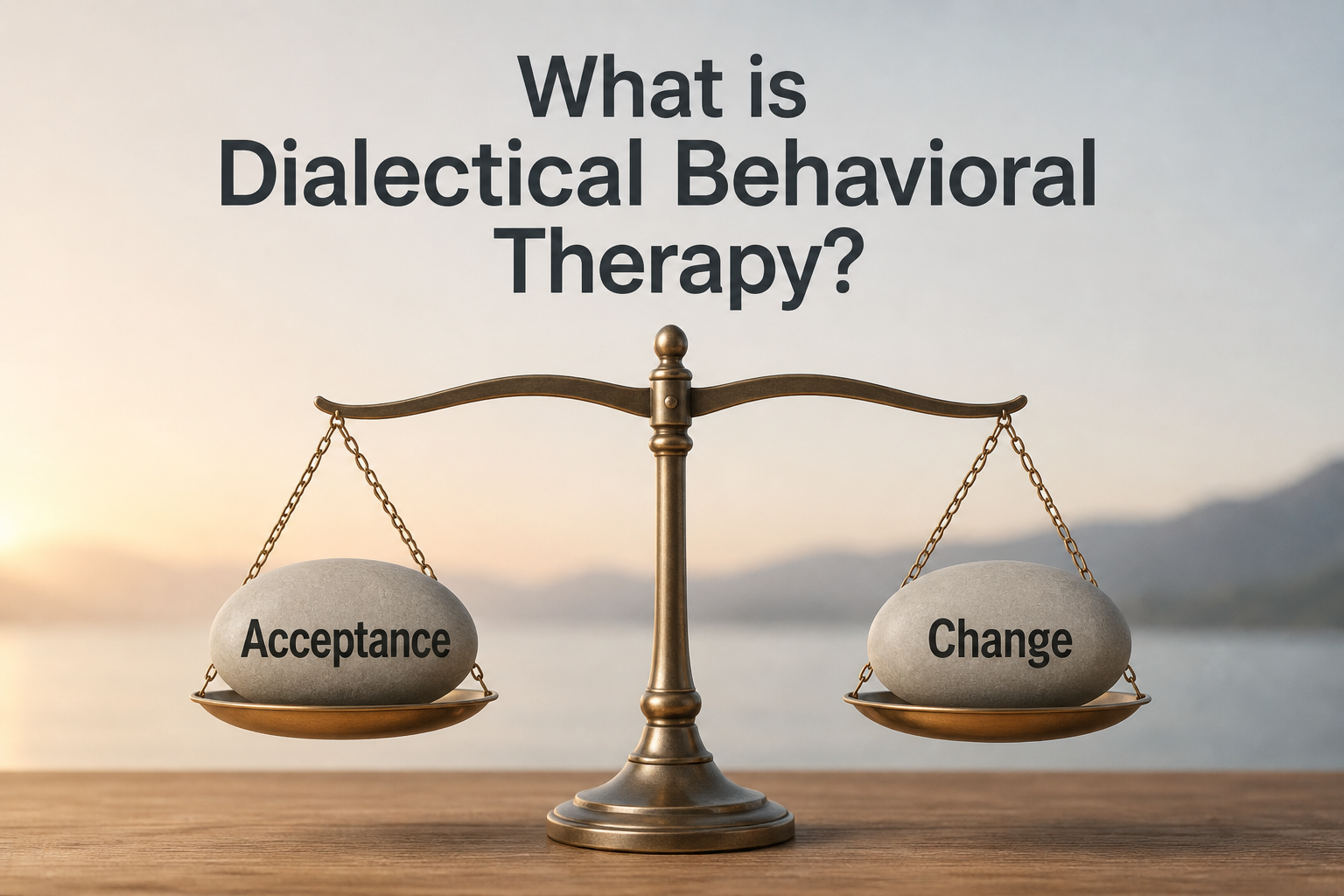
At its heart, DBT asks an interesting question: How can we accept ourselves and our lives as they are while also working to change them?

What Does “Dialectical” Mean?

The word dialectical refers to the idea that two things that seem contradictory can both contain truth.

For example:

I am doing the best I can, and I need to do better.

Those statements may initially seem incompatible. If I am already doing my best, why should I need to do better? DBT asks us to consider that both can be true. Given your history, circumstances, knowledge, emotional state, and skills, you may genuinely be doing the best you can right now. At the same time, what you are doing may not be working. You may need to learn new skills, make different choices, or change your circumstances.

This balance between acceptance and change runs throughout DBT. Acceptance without change can leave us stuck. Change without acceptance can turn into constant self-criticism. DBT tries to hold both.

The Assumptions of DBT

DBT is built around several assumptions about people and behavior. Among the most important are:

  • People are doing the best they can.
  • People want to improve.
  • People need to do better, try harder, and become more motivated to change.
  • People may not have caused all of their problems, but they still have to solve them.
  • New behaviors have to be learned and practiced in the situations where they are needed.
  • People cannot fail at DBT. When treatment isn’t working, the task is to understand what isn’t working and make adjustments.

These assumptions reflect the dialectical nature of the treatment. DBT does not require us to decide whether someone is responsible or blameless, strong or weak, trying or not trying. Human behavior is usually more complicated than that.

You may not have chosen the circumstances that caused your pain. You may nevertheless be the person who has to figure out what to do about it.

What Is the Goal of DBT?

The broad goal of DBT is sometimes described as building a life worth living.

That will mean different things to different people. For one person, it might mean maintaining relationships without constantly fearing abandonment. For another, it might mean getting through intense emotions without using substances or self-destructive behaviors. Someone else might want to communicate more effectively, manage anger, tolerate uncertainty, or stop allowing anxiety to dictate everyday decisions.

DBT therefore isn’t simply about making unpleasant feelings disappear. Sometimes feelings provide useful information. Sometimes distress is an understandable response to genuinely difficult circumstances. And sometimes a painful situation cannot immediately be changed.

Instead, DBT teaches us to respond more effectively to whatever situation we are actually facing.

Four Ways to Respond to a Problem

One particularly useful DBT idea is that there are essentially four ways we can respond to a problem.

We can solve the problem—or leave the situation. If something can be changed, we can identify the problem and take practical steps to address it. Sometimes the solution is changing or leaving the situation itself.

We can feel better about the problem. A situation may remain the same while our emotional response to it changes. We can examine our interpretations, regulate emotions, practice acceptance, or find a different way of relating to what happened.

We can tolerate the problem. Some problems cannot be fixed right now. DBT teaches distress-tolerance skills for getting through painful situations without making them worse.

Or we can do nothing and stay miserable.

That last option may sound harsh, but it reflects an important point: doing nothing is still a choice. Sometimes we cannot control what happened to us, what another person does, or what life has placed in our path. We can still work on choosing our response.

The Four DBT Skill Groups

DBT organizes many of its practical tools into four major skill areas.

Mindfulness teaches us to pay attention to what is happening in the present moment without immediately judging it or reacting to it. It forms the foundation for many other DBT skills.

Emotion regulation helps us understand emotions, reduce emotional vulnerability, and respond to feelings in ways that fit the situation rather than simply acting on emotional impulses.

Distress tolerance focuses on surviving painful moments that we cannot immediately change. The goal isn’t to pretend that distress feels good. It is to get through it without turning a difficult situation into an even more difficult one.

Interpersonal effectiveness focuses on relationships: asking for what we need, saying no, setting boundaries, managing conflict, maintaining self-respect, and balancing our own needs with those of other people.

Together, these skills provide something like a toolbox. DBT isn’t about using every tool in every situation. It is about recognizing what kind of problem you’re facing and learning which tool is most likely to help.

In the next four parts of this series, we’ll look more closely at each of these skill areas, beginning with mindfulness—the foundation on which the rest of DBT is built.


If you live in Washington State, and would like to set up an appointment with Susan Reimers, LICSW at Transcendent Mental Health, please click here.
Green leafy tree branches framing a blue sky with white clouds
Therapy, Uncategorized

The Basics of Somatic Therapy

How Healing the Body Can Support Mental Health

Line art of two women, one looking down and the other tilting head back with hand in hair

Mental health treatment often focuses on thoughts, emotions, and behavior. While these are important, many people are surprised to learn that the body also plays a major role in emotional well-being. Stress, trauma, anxiety, and depression are not only experienced in the mind—they are also stored and expressed physically. This is where somatic therapy comes in.

Somatic therapy is a body-centered approach to mental health that helps people process emotions, reduce stress, and heal trauma by increasing awareness of bodily sensations. As interest in holistic wellness continues to grow, somatic therapy has become an increasingly popular treatment option for individuals seeking a deeper connection between mind and body.

In this article, we’ll explore the basics of somatic therapy, how it works, its benefits, and who may benefit from this therapeutic approach.

What Is Somatic Therapy?

Somatic therapy is a form of psychotherapy that combines traditional talk therapy with body awareness practices. The word “somatic” comes from the Greek word soma, meaning “the living body.” Rather than focusing only on thoughts and emotions, somatic therapy helps people notice how experiences are physically held in the body.

This approach is based on the understanding that emotional distress and trauma can become trapped in the nervous system. Over time, unresolved stress may appear as muscle tension, chronic pain, fatigue, digestive issues, panic attacks, or emotional numbness.

Somatic therapists guide clients in recognizing physical sensations connected to emotions and past experiences. Through gentle techniques, individuals learn how to release tension, regulate their nervous systems, and feel safer in their bodies.

How Somatic Therapy Works

Somatic therapy works by helping individuals become more aware of the connection between physical sensations and emotional experiences. During sessions, a therapist may encourage clients to notice:

  • Tightness in the chest
  • Muscle tension
  • Changes in breathing
  • Heart rate shifts
  • Tingling sensations
  • Posture or movement patterns

The goal is not to force emotional release but to create a safe environment where the body can process stress naturally.

Unlike some traditional therapies that rely heavily on verbal communication, somatic therapy recognizes that trauma is not always fully accessible through words. The body may remember experiences even when the conscious mind cannot clearly explain them.

By paying attention to bodily responses, clients can gradually release stored survival energy linked to trauma, fear, or chronic stress.

Common Techniques Used in Somatic Therapy

Somatic therapy includes a variety of techniques designed to calm the nervous system and increase body awareness. Different therapists may use different methods depending on the client’s needs.

Breathwork

Controlled breathing exercises can help regulate the nervous system and reduce anxiety. Deep, mindful breathing encourages relaxation and helps individuals reconnect with their bodies.

Grounding Exercises

Grounding techniques help people stay connected to the present moment. This may involve noticing physical contact with the floor, focusing on the senses, or using gentle movement.

Body Scanning

A body scan involves mentally checking in with different parts of the body to identify areas of tension, discomfort, or emotional holding.

Movement Therapy

Some somatic approaches incorporate stretching, shaking, yoga-inspired movement, or guided physical exercises to release stress and increase emotional expression.

Mindfulness Practices

Mindfulness helps individuals observe sensations and emotions without judgment. This can improve emotional regulation and self-awareness.

Touch Therapy

In some forms of somatic therapy, trained practitioners may use safe and consensual touch techniques to support nervous system regulation. However, not all somatic therapists include physical touch.

Benefits of Somatic Therapy

Somatic therapy offers a range of mental and physical health benefits. Because it focuses on the nervous system and body awareness, many individuals find it especially helpful when traditional talk therapy alone has not fully addressed their symptoms.

Reduced Anxiety and Stress

Somatic practices can calm the body’s stress response and reduce chronic tension. Clients often report feeling more grounded and emotionally balanced.

Trauma Healing

Somatic therapy is widely used for trauma recovery, including post-traumatic stress disorder (PTSD). It helps individuals safely process traumatic experiences without becoming overwhelmed.

Improved Emotional Awareness

Many people struggle to identify or express emotions. Somatic therapy strengthens the connection between physical sensations and emotional understanding.

Better Nervous System Regulation

Learning how the nervous system responds to stress can help individuals recognize triggers and recover more quickly from emotional distress.

Relief from Physical Symptoms

Since emotional stress often appears physically, some people experience improvements in headaches, digestive discomfort, fatigue, and chronic muscle tension.

Stronger Mind-Body Connection

Somatic therapy encourages people to feel more connected to themselves, increasing self-awareness and self-compassion.

Who Can Benefit from Somatic Therapy?

Somatic therapy may benefit people dealing with a wide range of mental health and stress-related conditions, including:

  • Anxiety disorders
  • Depression
  • PTSD and trauma
  • Chronic stress
  • Panic attacks
  • Burnout
  • Grief and loss
  • Emotional numbness
  • Relationship difficulties

It can also support individuals who feel disconnected from their bodies or struggle with emotional regulation.

Some people choose somatic therapy as a standalone treatment, while others combine it with cognitive behavioral therapy (CBT), medication, mindfulness practices, or other forms of mental health support.

What Happens During a Somatic Therapy Session?

A somatic therapy session usually begins with conversation, similar to traditional psychotherapy. The therapist may ask about emotional experiences, stress levels, or physical symptoms.

As the session continues, attention may shift toward bodily sensations. The therapist might ask questions such as:

  • “What do you notice in your body right now?”
  • “Where do you feel tension?”
  • “What happens when you focus on that sensation?”

Sessions often move slowly and gently to avoid overwhelming the nervous system. The emphasis is on safety, awareness, and gradual healing.

Every therapist has a different style, so sessions may vary depending on the therapeutic approach being used.

Is Somatic Therapy Evidence-Based?

Research on somatic therapy continues to grow, especially in the areas of trauma treatment and nervous system regulation. Studies suggest that body-centered therapies may help reduce symptoms of anxiety, PTSD, and chronic stress.

Many mental health professionals now recognize the importance of including the body in emotional healing. While somatic therapy may not replace all traditional mental health treatments, it can be a valuable complement to existing therapies.

Final Thoughts

Somatic therapy offers a unique and holistic approach to mental health by recognizing the powerful connection between mind and body. Instead of focusing only on thoughts and emotions, this therapy helps individuals tune into physical sensations, regulate the nervous system, and release stored stress and trauma.

For people seeking a deeper, body-centered path to emotional healing, somatic therapy may provide meaningful support. As awareness of trauma-informed care and holistic wellness grows, somatic therapy is becoming an important part of modern mental health treatment.

Understanding the basics of somatic therapy is the first step toward discovering how the body can become an active partner in healing, resilience, and emotional well-being.

Sun rays shining through dark storm clouds above green and brown mountains
Therapy

How to Cope With Panic Attacks Caused by Trauma and PTSD

Woman holding her head in stress at office desk with computer screens

Panic attacks can feel terrifying, especially when they are connected to unresolved trauma or Post-Traumatic Stress Disorder (PTSD). A racing heart, shortness of breath, dizziness, trembling, and overwhelming fear can make it feel as though something catastrophic is happening. For trauma survivors, panic attacks are often more than anxiety—they are the nervous system reacting to reminders of past danger.

Understanding how trauma-related panic works is an important first step toward healing. The good news is that there are effective treatments and coping strategies available, including therapy, medication, grounding exercises, and lifestyle interventions. With the right support, it is possible to reduce the intensity and frequency of panic attacks and regain a sense of control.

What Causes Panic Attacks in PTSD?

PTSD changes the brain and body’s stress response system. After experiencing trauma, the nervous system can become stuck in “survival mode.” This means the brain may interpret ordinary situations as threatening, even when there is no immediate danger.

Triggers for trauma-induced panic attacks can include:

  • Loud noises or crowded environments
  • Flashbacks or intrusive memories
  • Emotional conflict or relationship stress
  • Certain smells, sounds, or locations
  • Feeling trapped, powerless, or overwhelmed

When triggered, the body releases stress hormones like adrenaline and cortisol, activating the fight-or-flight response. The result can be intense physical and emotional symptoms that feel impossible to control in the moment.

Immediate Coping Strategies for Panic Attacks

1. Use Grounding Techniques

Grounding exercises help bring attention back to the present moment instead of the traumatic memory or fear response.

One of the most effective methods is the “5-4-3-2-1” grounding exercise:

  • 5 things you can see
  • 4 things you can touch
  • 3 things you can hear
  • 2 things you can smell
  • 1 thing you can taste

This technique helps interrupt the panic cycle and reminds the brain that you are safe right now.

2. Focus on Slow Breathing

Trauma-related panic attacks often cause rapid, shallow breathing, which can worsen dizziness and fear. Deep breathing exercises help regulate the nervous system and reduce physical symptoms of panic.

A simple method is box breathing:

  • Inhale for 4 seconds
  • Hold for 4 seconds
  • Exhale for 4 seconds
  • Pause for 4 seconds

Repeating this cycle for several minutes can calm the body’s stress response.

3. Challenge Catastrophic Thoughts

Panic attacks often come with frightening thoughts such as:

  • “I’m dying.”
  • “I’m losing control.”
  • “I’m not safe.”

While these thoughts feel real during panic, they are symptoms of the nervous system being overstimulated. Repeating calming statements like “This is a panic attack,” or “I have survived this before,” can help reduce fear and restore perspective.

4. Engage the Body

Trauma lives not only in the mind but also in the body. Gentle movement can help release nervous system tension during a panic attack.

Helpful physical interventions include:

  • Walking
  • Stretching
  • Progressive muscle relaxation
  • Holding ice cubes or splashing cold water on the face
  • Using a weighted blanket

These sensory experiences help reconnect the body to the present environment.

Best Therapies for PTSD and Panic Attacks

Professional mental health treatment is often essential for long-term healing. Several evidence-based therapies are highly effective for trauma-related panic.

Cognitive Behavioral Therapy (CBT)

CBT helps individuals identify negative thought patterns that fuel anxiety and panic attacks. It teaches practical coping skills and healthier ways to respond to triggers.

Eye Movement Desensitization and Reprocessing (EMDR)

EMDR is a trauma-focused therapy designed to help people process painful memories in a safer and less emotionally overwhelming way. Many PTSD survivors report significant reductions in panic symptoms after EMDR treatment.

Exposure Therapy

Exposure therapy gradually helps people confront triggers in controlled, supportive settings. Over time, this can retrain the brain to stop interpreting those triggers as dangerous.

Somatic Therapy

Somatic approaches focus on how trauma is stored physically in the body. Techniques involving breathwork, movement, and body awareness can help regulate the nervous system and reduce chronic hypervigilance.

Medication Options for Panic Attacks and PTSD

Medication can be an effective part of treatment, especially when panic attacks interfere with work, sleep, or daily functioning.

Common medications include:

  • Sertraline
  • Paroxetine
  • Fluoxetine

These antidepressants are often prescribed for both PTSD and panic disorder because they help regulate serotonin levels and reduce overall anxiety over time.

Some individuals may also benefit from short-term anti-anxiety medications such as:

  • Lorazepam
  • Clonazepam

These medications can reduce acute panic symptoms quickly but are generally used cautiously because of potential dependence risks.

For PTSD-related nightmares and sleep disturbances, medications like Prazosin may also help improve sleep quality and nighttime anxiety.

Medication decisions should always be made with a licensed healthcare provider who understands trauma and anxiety disorders.

Lifestyle Changes That Help Reduce Panic Attacks

Healing from trauma requires supporting the nervous system consistently, not just during moments of crisis. Important lifestyle habits include:

Prioritize Sleep

Poor sleep increases stress hormones and emotional reactivity. Creating a calming nighttime routine can help reduce panic vulnerability.

Limit Caffeine and Alcohol

Both substances can intensify anxiety symptoms and trigger panic attacks in sensitive individuals.

Practice Daily Mindfulness

Meditation, yoga, journaling, and mindfulness exercises can help retrain the brain to stay present rather than stuck in survival mode.

Build Safe Connections

Isolation often worsens PTSD symptoms. Supportive relationships, trauma-informed therapy, and support groups can provide emotional safety and validation.

Recovery Is Possible

Living with panic attacks caused by trauma or PTSD can feel exhausting and isolating, but healing is possible. Recovery does not mean never feeling anxious again. It means learning how to regulate the nervous system, process traumatic experiences safely, and regain confidence in your ability to cope.

Panic attacks are not signs of weakness. They are signs of a nervous system that has been overwhelmed and is trying to protect itself. With the right combination of coping strategies, therapy, lifestyle support, and medical care when needed, people can move from survival mode toward stability, safety, and healing.

Therapy

The Power of Positive Self-Talk

What It Is, What It Isn’t, and Why It Matters

Negative self-talk is so common that many of us barely notice it. It’s the quiet background noise of the mind: You should be further along by now. Why can’t you do this like everyone else? You always mess things up. For some people it’s an occasional visitor; for others it’s a near-constant narrator. Either way, the way we talk to ourselves shapes our emotions, our behavior, and even our sense of what’s possible in our lives.

Let’s look at the real costs of negative self-talk—and why learning a more compassionate, constructive inner voice isn’t just “feel-good fluff,” but a practical life skill.


The Hidden Costs of Negative Self-Talk

1. Living by Imaginary Standards

A lot of negative self-talk comes from comparing ourselves to standards that are unclear, unrealistic, or not even ours. We absorb ideas about success, productivity, beauty, or likability from family, culture, or social media, and then silently punish ourselves for not measuring up.

The cost? Chronic dissatisfaction. When the bar is always moving—or impossibly high—you never get to feel “enough.” Even real accomplishments feel hollow because the inner critic quickly shifts the goalposts.

2. Shame About Traits and Performance

Negative self-talk often targets stable traits (“I’m lazy,” “I’m awkward,” “I’m bad with people”) instead of specific behaviors. This turns temporary struggles into identity-level judgments.

Shame is particularly costly because it makes change harder. If you believe a flaw is who you are rather than something you do, why try? Shame also pushes people toward hiding, withdrawing, or perfectionism—none of which support growth.

3. Emotional and Physical Toll

Research consistently links harsh self-criticism with higher anxiety, depression, and stress. Your brain doesn’t fully distinguish between an external bully and an internal one. Repeated self-attacks can keep your nervous system in a mild threat state, raising stress hormones and draining emotional energy.

4. Reduced Motivation

Many people believe self-criticism keeps them accountable. In reality, it often does the opposite. When tasks are paired with self-attack, your brain learns to associate effort with pain. Procrastination and avoidance then make perfect sense—they’re protective moves.


The Benefits of Positive Self-Talk

Positive self-talk isn’t about pretending everything is great. It’s about speaking to yourself in ways that are accurate, kind, and useful.

1. Greater Resilience

When your inner voice says, That was hard, but you handled parts of it well and you can try again, setbacks become information rather than verdicts. You bounce back faster because your self-worth isn’t on the line every time.

2. Better Performance

Athletes and performers use constructive self-talk to improve focus and persistence. Statements like Stay with it, One step at a time, or You’ve done hard things before help regulate emotions and maintain effort.

3. Healthier Relationships

The way you talk to yourself often spills into how you relate to others. When you’re less harsh internally, you tend to be less defensive, less approval-seeking, and more open. Self-compassion makes room for compassion toward others.

4. A Stable Sense of Worth

Genuine positive self-talk builds worth that isn’t dependent on constant success. You become someone who can say, I value myself even while I’m growing.


Practical Strategies for Shifting Self-Talk

1. Notice and Name It

You can’t change what you don’t notice. Start by catching your inner commentary. Some people find it helpful to write down recurring phrases. Label them gently: That’s my inner critic talking.

2. Use the “Friend Test”

Ask: Would I say this to a good friend in the same situation? If not, try rephrasing.

  • From: I’m terrible at this.
  • To: I’m still learning this.

3. Aim for Believable, Not Rosy

Your brain rejects statements it knows are false. Instead of I’m amazing at everything, try I’m improving, or I can handle this step. Realistic encouragement works better than over-the-top praise.

4. Try Self-Compassion Breaks

A simple tool from self-compassion research includes three steps:

  • Mindfulness: “This is a moment of struggle.”
  • Common humanity: “Struggle is part of being human.”
  • Kindness: “May I be kind to myself here.”

This interrupts the spiral of self-attack.

5. Externalize the Critic

Some people imagine their inner critic as a character or voice separate from their core self. This can make it easier to say, Thanks for your input, but I’m choosing a different response.

6. Values-Based Self-Talk

Instead of focusing on how you feel or how you compare, focus on what matters to you.

  • I’m choosing to do this because I value growth.
  • I care about being reliable, so I’ll take one step.

This anchors your self-talk in direction, not judgment.


Tools That Can Help

  • Journaling: Track patterns in your thinking.
  • Cognitive Behavioral Therapy (CBT) worksheets: Help challenge distorted thoughts.
  • Mindfulness or meditation apps: Build awareness of inner dialogue.
  • Voice notes to yourself: Some people benefit from literally recording encouraging reminders.

You don’t need all of these—just one or two practiced consistently.


Genuine vs. Toxic Positive Self-Talk

It’s important to distinguish healthy positive self-talk from what might be called “toxic positivity” or narcissistic self-talk.

Genuine positive self-talk is:

  • Grounded in reality
  • Open to feedback
  • Compassionate toward self and others
  • Aimed at growth

Examples:
I have strengths and weaknesses like everyone.
I made a mistake and I can repair it.

Toxic or narcissistic self-talk is:

  • Inflated and defensive
  • Dismissive of others
  • Resistant to accountability
  • Used to prop up fragile self-esteem

Examples:
I’m better than everyone else.
Nothing is ever my fault.

The key difference is that genuine positive self-talk includes humility and responsibility. It doesn’t deny flaws; it holds them in a larger, kinder perspective.


Your inner voice is one of the few companions you have for life. It can be a harsh drill sergeant or a steady coach. Changing it doesn’t happen overnight, but small shifts matter. Each time you replace a cruel thought with a fair and supportive one, you’re not just “being nice to yourself”—you’re building a mental environment where growth is actually possible.

Therapy, Uncategorized

Fear-Based Avoidance

Fear-Based AvoidanceWhen Protection Turns Into a Prison

Fear gets a bad rap, but it didn’t evolve to ruin your life. Fear exists because bodies are ancient survival machines. Long before there were performance reviews, family group chats, or dating apps, fear kept our ancestors from walking off cliffs or petting animals with too many teeth. At its core, fear is a protective biological process: your nervous system scanning for danger and mobilizing you to survive it.

The problem isn’t fear itself. The problem is when the fear dial gets turned way too high.

Modern fear is often wildly mismatched to modern threats. Our bodies respond to social rejection, uncertainty, and emotional discomfort as if they were physical dangers. The same system that once helped us escape predators now floods us with adrenaline because we might say the wrong thing, feel embarrassed, disappoint someone, or fail at something that matters. Fear starts overestimating danger while underestimating our ability to cope. And when that happens, avoidance can quietly take over our lives.

Fear-based avoidance sounds reasonable on the surface. I’ll do it when I feel more confident. I’ll speak up once I’m less anxious. I’ll pursue that thing after I fix myself first. But avoidance doesn’t make fear shrink. It teaches your nervous system that fear was right all along. Every time you avoid, your brain learns: Good call. That was dangerous. The fear grows stronger, broader, and more convincing.

This is where Acceptance and Commitment Therapy (ACT) offers a different approach—not about eliminating fear, but about changing your relationship to it.

Fear Is Sensation Plus Story

ACT draws an important distinction between the physical sensations of fear and the stories our minds tell about those sensations. The body does its thing: racing heart, tight chest, shallow breathing. The mind piles on meaning: This is unbearable. This will end badly. You can’t handle this.

Those thoughts feel authoritative, but they’re not commands—they’re mental events. ACT calls the process of stepping back from them cognitive defusion. Instead of arguing with fear (“This isn’t scary!”), you notice it: I’m having the thought that this will end in disaster. That small shift creates space. You’re no longer inside the story; you’re observing it.

Fear loses some of its grip when it’s seen as information rather than instruction.

Values Give Fear a Direction

Avoidance thrives when fear is the boss. Values flip the hierarchy.

Values aren’t goals you complete; they’re directions you move in. Connection. Integrity. Creativity. Justice. Curiosity. Care. They answer the question: What kind of person do I want to be, even when it’s uncomfortable?

ACT doesn’t ask, How do I get rid of fear so I can live my life? It asks, What do I want my life to stand for—and am I willing to feel fear in service of that?

This matters because fear shows up most intensely around things that matter. If you didn’t care, you wouldn’t be scared. Anxiety before speaking up often points to a value of honesty or fairness. Fear of rejection often signals a longing for connection. Fear isn’t proof you’re weak—it’s evidence that you’re alive and invested.

Accepting Pain Without Surrendering Your Life

Acceptance in ACT doesn’t mean liking fear or resigning yourself to suffering. It means making room for discomfort without letting it decide your behavior. You stop fighting sensations that can’t be controlled and start focusing on actions that can be chosen.

Try this in real time:

  • Name the sensations (“tight throat,” “heat in my face”).
  • Breathe into them rather than away from them.
  • Remind yourself: This is uncomfortable, not dangerous.

Pain shrinks when it’s allowed and grows when it’s resisted. Avoidance trades short-term relief for long-term restriction. Acceptance trades short-term discomfort for long-term freedom.

Courage Is Usually Small and Repetitive

We tend to think of courage as something dramatic: charging into battle, stepping onto a stage, making a grand declaration. But most courage is quiet and unglamorous. It’s sending the email you’re tempted to overthink for a week. It’s staying present during a difficult conversation. It’s showing up imperfectly instead of waiting to feel ready.

Courage isn’t the absence of fear. It’s choosing to act while fear rides along in the passenger seat.

ACT emphasizes commitment—making small, values-based promises to yourself and keeping them, even when your mind protests. Start tiny. Not “I’ll never avoid again,” but “I’ll take one step toward what matters today.” Momentum builds through repetition, not intensity.

Practical Ways to Challenge Fear-Based Avoidance

  • Name the function of avoidance. Ask, What is this avoiding helping me not feel right now? Relief, embarrassment, vulnerability?
  • Shrink the step. Fear thrives on vagueness. Make actions concrete and doable.
  • Bring fear with you. Stop waiting for it to leave. Say, You can come, but you don’t get to drive.
  • Track values, not comfort. Measure success by alignment, not ease.
  • Practice defusion daily. Thoughts repeat; your relationship to them can change.

Fear will always try to keep you safe. Thank it for the intention—and then gently remind it that safety is not the same thing as living.

You don’t need to be fearless to live boldly. You just need to be willing.

Therapy

Burnout…

What It Is and How to Recover

Burnout Defined

Burnout is a word we hear often, but many people don’t recognize it until they’re already deep in it. It’s not just feeling tired after a long week or unmotivated for a day or two. Burnout is a state of emotional, mental, and often physical exhaustion caused by prolonged stress—especially when that stress feels relentless, unavoidable, or disconnected from meaning or reward. It can creep in quietly, disguising itself as “just pushing through,” until even simple tasks feel overwhelming.

At its core, burnout happens when demand consistently exceeds capacity. You give more than you can sustainably replenish. Over time, your system doesn’t just get tired—it starts to shut down as a form of self-protection.

What Burnout Feels Like

Burnout often shows up as chronic fatigue, cynicism, irritability, brain fog, or a sense of emotional numbness. You might feel detached from your work or relationships, find it harder to care about things that once mattered, or feel trapped in a loop of obligation without relief. Many people also experience physical symptoms: headaches, muscle tension, sleep problems, or increased illness.

One reason burnout is so common is that our culture rewards overcommitment. We glorify productivity, hustle, and resilience while quietly discouraging rest and limits. Many people treat life like a series of sprints—constantly rushing, pushing, and accelerating—when in reality, a sustainable life is more like a marathon. Sprinting occasionally is fine. Sprinting all the time is not.

Spoon Theory and the Cost of Overcommitting

A helpful framework for understanding burnout is spoon theory. Originally developed to describe chronic illness, spoon theory uses “spoons” as a metaphor for energy units. Each task—getting dressed, going to work, having a conversation—costs a certain number of spoons. When you’re out of spoons, you’re done for the day.

Burnout often develops when we repeatedly plan our lives as if we have unlimited spoons. We say yes to too much, underestimate the energy cost of obligations, and assume tomorrow we’ll magically have more capacity. Overcommitting—whether at work, in family roles, or socially—drains spoons faster than they can be replenished. Recovery requires learning to budget energy realistically, not optimistically.

Recovery Is Not a Vacation—It’s a Recalibration

Recovering from burnout isn’t just about taking a break, though breaks help. Many people take time off only to return to the same patterns, expectations, and internal pressures that caused burnout in the first place. True recovery requires both rest and structural change.

Here are five strategies that can support healing and help prevent burnout from returning.


1. Shift from Sprinting to Pacing

Burnout recovery begins with changing how you move through life. If you’ve been living in constant urgency, your nervous system is likely stuck in overdrive. Pacing means intentionally slowing down, building in margins, and leaving some energy unused.

This may feel uncomfortable at first, especially if your identity is tied to productivity. But pacing doesn’t mean doing nothing—it means doing what’s sustainable. Ask yourself: Could I keep living this way for years? If the answer is no, something needs to change.


2. Reassess Commitments and Say Fewer Yeses

Burnout thrives on unexamined obligation. Recovery requires a hard look at where your energy is going. Which commitments are essential, and which are inherited, habitual, or guilt-driven?

Start by reducing, not optimizing. You don’t need a more efficient schedule—you need a lighter one. Practice saying no, postponing decisions, or offering partial participation. Protecting your energy is not selfish; it’s necessary.


3. Restore Rest (Without Earning It)

Many burned-out people only rest when they feel they’ve “earned” it. Recovery asks you to flip that belief. Rest is not a reward—it’s a biological requirement.

This includes sleep, but also mental rest (less stimulation), emotional rest (fewer draining interactions), and sensory rest (quiet, nature, reduced screen time). Rest may feel unproductive, but it is the soil where recovery grows.


4. Reconnect with Meaning, Not Just Output

Burnout often strips life of meaning, leaving only tasks and expectations. Part of healing involves reconnecting with why you do what you do—or discovering new sources of meaning altogether.

This might involve creativity, values-based work, relationships, spirituality, or small moments of pleasure and curiosity. Meaning doesn’t have to be grand. It just has to be yours.


5. Seek Support and Normalize Needing Help

Burnout is not a personal failure; it’s a human response to chronic strain. Talking with a therapist, counselor, or trusted person can help you untangle unrealistic expectations, perfectionism, or people-pleasing patterns that fuel burnout.

Support also reminds you that you don’t have to carry everything alone. Recovery is faster—and gentler—when it’s shared.


Moving Forward

Burnout recovery is not linear. There will be days when energy returns, and days when it doesn’t. The goal is not to get back to who you were before burnout, but to build a life that doesn’t require burning yourself down to function.

When you stop treating life like an endless sprint, honor your limited spoons, and allow rest to be part of the plan, something important happens: energy slowly comes back—not as adrenaline, but as steadiness. And that kind of energy lasts.

Therapy

Challenging Perfectionism

Learning to Be Okay with Being Human

Perfectionism often disguises itself as motivation. It whispers that we’re only as good as our latest achievement, our cleanest home, our most flawless performance. At first, it can seem like a drive toward excellence. But over time, perfectionism becomes less about doing well and more about avoiding failure — or the feeling of being “not enough.” It can keep us trapped in cycles of anxiety, self-criticism, and emotional exhaustion.

Learning to challenge perfectionism isn’t about lowering your standards; it’s about freeing yourself from the belief that you must be flawless to be worthy. It’s about learning to live, breathe, and even thrive in the presence of imperfection — your own and the world’s.


Recognize the Voice of Perfectionism

The first step is noticing when perfectionism is speaking. Its voice often sounds like:

  • “If I can’t do it perfectly, it’s not worth doing.”
  • “Everyone else is doing better than me.”
  • “I should have known better.”
  • “If I make a mistake, people will see I’m not good enough.”

Try writing these thoughts down as they arise. Seeing them on paper creates distance between you and them. These aren’t objective truths; they’re stories you’ve learned to tell yourself. Ask: Whose standards am I trying to meet? and What am I afraid would happen if I didn’t meet them?

Naming perfectionism gives you power to challenge it.


Redefine What “Good Enough” Means

Perfectionism operates on extremes — success or failure, right or wrong, perfect or worthless. Real life lives in the gray area.

To soften perfectionism’s grip, begin redefining what “good enough” looks like in your daily life. That might mean:

  • Finishing a project when it meets its purpose, not when it feels flawless.
  • Showing up to a social event even if you’re not feeling your best.
  • Sending the email even if the wording isn’t poetic.

You might even make a “Good Enough List”: write down specific examples of tasks that don’t need to be perfect — meals, chores, emails, workouts, conversations. Each time you accept “good enough,” you strengthen the muscle of self-acceptance.

Try saying to yourself:

“I can do things imperfectly and still be proud of myself.”
“Progress counts more than perfection.”
“Done is better than perfect.”

These aren’t excuses for laziness; they’re affirmations of humanity.


Build Comfort with Mistakes

Mistakes don’t define your worth — they reveal your growth edges.

When you make a mistake, try shifting from self-criticism to curiosity. Instead of “I’m so stupid,” say,

“That didn’t go the way I hoped. What can I learn from it?”

Curiosity is the antidote to shame. It transforms “I failed” into “I learned.” Over time, this practice rewires the emotional association between mistakes and self-worth. Instead of spiraling into self-rejection, you learn to meet mistakes with patience and compassion.

Another tool: imagine talking to a close friend who made the same mistake. You’d likely say, “It’s okay — you’re human. You’ll figure it out.” Try saying that to yourself, even if it feels awkward at first.

Self-talk might sound like:

“It’s safe for me to be learning.”
“I’m still growing, and that’s what matters.”
“Making mistakes doesn’t make me a failure — it makes me real.”


Practice Imperfect Action

Perfectionism thrives on delay — waiting until you feel ready, certain, or “good enough.” The antidote is imperfect action.

Choose something small: share a creative project before you think it’s ready. Try a new recipe without overplanning. Speak up even if your voice shakes. Each act of imperfect action is a quiet rebellion against perfectionism’s tyranny.

The goal isn’t to fail intentionally — it’s to act without the guarantee of perfection. Over time, you’ll build tolerance for uncertainty and learn that your worth doesn’t depend on outcomes.

You can remind yourself:

“It’s better to try imperfectly than to not try at all.”
“Every step forward counts, even if it’s messy.”

Imperfect action builds confidence through lived experience, not imagined mastery.


Develop a Kinder Inner Voice

Perfectionism often grows from an inner critic that once tried to protect you — maybe from disapproval, rejection, or shame. But as adults, we can replace that harsh voice with one that supports growth instead of fear.

Positive self-talk isn’t about empty affirmations; it’s about re-parenting the part of you that feels unsafe being imperfect.

When you notice the critic saying, “You’re not good enough,” respond gently:

“I’m doing my best, and that’s enough for today.”

When it says, “You messed up again,” try:

“It’s okay to be learning. I can still be kind to myself.”

If it says, “People won’t like you if you fail,” answer:

“I’m allowed to be real. People connect with honesty, not perfection.”

Write a few affirmations that resonate with you and keep them visible — on your phone background, a sticky note, or your mirror. Over time, your brain learns to reach for kindness first.


6. Embrace Humanity Over Performance

Perfectionism teaches us to perform — to prove we’re deserving. But connection doesn’t come from being impressive; it comes from being authentic. When you allow yourself to be imperfect, you give others permission to do the same.

Notice how your relationships feel when you drop the façade, when you say, “I don’t know,” or “I’m struggling.” Vulnerability can be deeply uncomfortable — but it’s also deeply freeing.

You might remind yourself:

“I am lovable, not because I’m perfect, but because I’m human.”


Closing Thought

Challenging perfectionism isn’t about giving up on growth — it’s about reclaiming the right to grow freely. It’s learning that your worth is inherent, not earned through flawless performance.

When you make peace with imperfection, you stop chasing a moving target and start living your real, messy, beautiful life. You begin to realize: the cracks in you were never flaws — they were openings for light to get in.

Therapy, Uncategorized

Finding Peace in a Chaotic World

Reframing the Present Moment in Troubling Times

As a therapist, I sit daily with clients who are deeply troubled by the world around them. The political landscape—both domestic and international—feels increasingly divisive. Newsfeeds are full of polarization, violence, climate disasters, and human suffering. For many, it’s not just background noise—it’s a constant hum of distress, a source of anxiety that feels both urgent and completely out of their control.

I understand that distress. I feel it too. But over the years, both personally and professionally, I’ve come to believe something important: peace is not found in ignoring the chaos. Peace is found in how we relate to it.

We live in a time where we’re more informed than ever, yet often feel more powerless than ever. We carry global suffering in our pockets, absorbing a relentless stream of information we were never meant to hold. While our awareness can deepen empathy, it can also overwhelm us, leaving us paralyzed or despairing. The solution is not to disengage—but to refocus.

Mindfulness: Returning to the Present Moment

One of the most powerful tools I teach is present-focused mindfulness. That’s not just sitting cross-legged and breathing (though that can help). It’s the daily, moment-to-moment practice of bringing our attention back from the swirling chaos of the world into what’s right in front of us.

When your mind spirals with “What ifs?” about the future or ruminates on all that’s going wrong, mindfulness invites a different question: “What is happening right now?”

Right now, your feet are on the ground. You’re breathing. You’re alive. Perhaps someone nearby needs kindness. Perhaps there’s a small task in front of you that deserves your care. The practice of noticing, grounding, and gently returning to now—again and again—is not escapism. It’s choosing to anchor yourself in a storm.

When the world feels out of control, mindfulness reminds us: this moment is still yours.

Reframing: Shifting from Helplessness to Engagement

Many of my clients come in with language like, “Everything is falling apart,” or “There’s nothing I can do.” While those feelings are valid, they’re often rooted in distorted, all-or-nothing thinking. This is where cognitive reframingbecomes essential.

Reframing doesn’t mean denying reality. It means choosing to see the fuller picture. Yes, there is suffering and injustice. And—there is also kindness, resilience, and people doing good work every single day.

Ask yourself:

  • Can I honor the pain of the world without letting it consume me?
  • Can I acknowledge what’s wrong without losing sight of what’s right?

Reframing allows us to hold both truths. It opens space for agency and hope, without demanding toxic positivity or denial.

Control the Controllables

One of the biggest sources of distress is the feeling that we should be doing more, knowing more, solving more. But the truth is, we can’t control everything. Not even close.

Here’s a therapeutic mantra I often share:
“Focus on what you can control. Let go of what you can’t. Know the difference.”

You can’t control political decisions made across the world. But you can control how you show up today. You can limit your news intake. You can vote. You can engage in difficult conversations with respect and curiosity. You can be kind to your neighbor. You can raise your children with empathy and integrity.

This isn’t about shrinking your concern. It’s about focusing your energy where it can actually make a difference—and protecting your mental health in the process.

Zooming In: The Power of Local and Micro Acts

When we constantly focus on the macro—global headlines, massive systems, overwhelming statistics—we often end up feeling powerless. But zoom in, and you’ll see a different picture.

Change happens locally. Healing happens in micro moments.

Ask yourself:

  • What’s happening in my community?
  • Who can I help?
  • How can I make one person’s day better?

One client of mine felt despair over climate change—until she committed to adjusting her own lifestyle choices to reduce her carbon footprint. Another was overwhelmed by political vitriol—until he joined a respectful bipartisan group as a way to humanize those he disagreed with. Small actions, grounded in values, create ripples.

When you zoom in, you realize: you’re not powerless. You’re part of something.

Living According to Values-Based Commitments

Mindfulness and reframing help us calm the storm. But long-term peace comes from living in alignment with our values—especially in a chaotic world.

Ask yourself:

  • What kind of person do I want to be?
  • What values matter most to me—compassion, justice, integrity, community?
  • How can I embody those values, right here, right now?

You may not be able to fix the world. But you can show up with courage, kindness, and purpose. You can be a steady, grounded presence for others. You can take action not from panic, but from principle.

This is the heart of Acceptance and Commitment Therapy (ACT), one of the frameworks I often use in therapy: aligning your actions with your values, even when things feel uncertain or hard.


In a divided, noisy, and often painful world, calm may feel elusive. But peace is not the absence of chaos—it’s how you hold yourself within it.

So breathe. Come back to this moment. Zoom in. Reframe. Act with intention. And trust that even your smallest acts of grounded, values-based living matter.

Because they do.

:), Susan Reimers, JD/LICSW